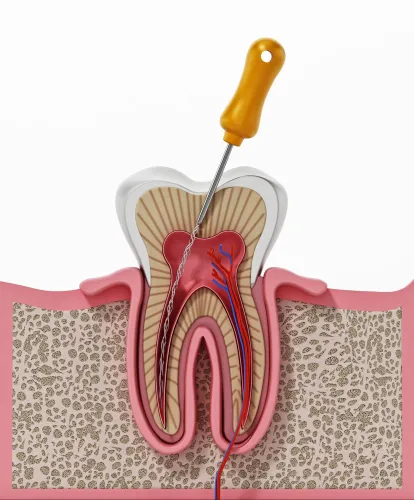
The cheaper procedure at the first appointment is not always the cheaper treatment over the tooth’s lifetime. By comparing restorability, complete treatment pathways, replacement costs, time, risks, and maintenance, you can request two realistic plans and decide whether preserving or removing the tooth offers better value.
Key takeaways
- Compare the full treatment and replacement cost, not the first procedure fee.
- Save a tooth when enough strong structure remains to support a crown.
- Extraction is incomplete until you plan for healing and tooth replacement.
- Request both written treatment pathways, including timelines, fees and follow-up care.
Compare the complete cost, not the first procedure fee
The cheaper first procedure is often not the cheaper treatment. For root canal versus tooth extraction in Nagpur, compare two written treatment pathways rather than two advertised procedure fees.
| Pathway | Include before treatment is complete | Costs that may follow |
|---|---|---|
| Root canal | X-rays, consultation, anaesthesia, rubber-dam isolation, canal treatment, medicines, temporary filling, definitive filling and crown or cuspal-coverage restoration | Follow-up, retreatment or apical surgery if symptoms persist or the tooth later fails |
| Extraction | X-rays, anaesthesia, extraction, medicines, follow-up and socket care | Socket preservation or grafting, then a bridge, removable partial denture, implant and crown, or no replacement |
| Extraction without replacement | The extraction and healing review | Reduced chewing, tooth movement and later treatment if replacement becomes necessary |
A restorable tooth with sound bone support and enough remaining walls often costs less to keep than to remove and replace.
Extraction can cost less overall when the tooth cannot be restored, replacement is unnecessary, or a replacement is deliberately deferred; a difficult extraction can also add cost through bleeding, infection, dry socket or retained fragments.
Request estimates that show each stage separately:
- Initial examination, X-rays, medicines and follow-up visits
- Root canal, temporary restoration, crown and retreatment contingency
- Extraction, grafting or socket preservation, healing review and replacement
- Whether laboratory charges, implant components and crown charges are included
Do not consent until both totals show what is included, what is optional, and what happens if the first plan fails.
When is the tooth restorable enough to save?
Root canal treatment is realistic when enough sound tooth remains above and below the gum to support a sealed restoration. The decision is not based on infection alone: a badly infected tooth can still be saved if its structure, bone support and access are favourable.
The clinical findings that usually decide whether saving is predictable include:
- Adequate remaining walls and a ferrule: a continuous band of sound tooth, ideally about 1.5–2 mm above the gum, helps a crown resist splitting.
- A crack that does not extend vertically into the root. A vertical root fracture usually makes extraction more predictable.
- Decay that the dentist can expose, clean and isolate. Caries extending deep below the gum can prevent a durable seal.
- Periodontal probing and bone support without an isolated deep pocket or severe attachment loss around the tooth.
- A canal system that can be located, disinfected and sealed safely. An inaccessible canal, separated instrument or complex anatomy affects prognosis.
- Enough strategic value to justify treatment, with a restoration that can withstand chewing forces.
If the tooth has no usable walls, cannot be isolated, has severe supporting-bone loss, or carries a confirmed vertical root fracture, root canal treatment cannot restore its foundation. A crown after treatment is part of the plan, not an optional extra for many premolars and molars.
Ask for this assessment before choosing tooth extraction or root canal in Nagpur. The same findings should guide whether you save the tooth or remove it in Nagpur, rather than the procedure’s advertised fee alone.
What you actually receive with each treatment pathway
The treatment fee buys only the first appointment. Root canal treatment usually preserves the natural tooth, while extraction removes it and creates a replacement decision.
| Option | What you receive | What follows |
|---|---|---|
| Root canal | Numbing, rubber-dam isolation, canal cleaning, disinfection, filling and a temporary or sealed restoration | Review, permanent build-up and often a crown or other cuspal-coverage restoration; retreatment or surgery if disease persists |
| Extraction | Numbing, tooth removal, socket care instructions and medicines when indicated | Healing, possible socket grafting, then a temporary or definitive replacement |
A molar or premolar can fracture after root canal treatment if chewing forces reach weakened walls. Treat “root canal crown saving in Nagpur” as one plan: ask whether the tooth needs a crown, when it will be fitted, and whether the estimate includes the build-up, temporary seal and review.
After extraction, the replacement choice depends on bone, adjacent teeth, budget and chewing demands:
- Dental implant, usually followed by an implant crown after the site heals; grafting can add another procedure.
- Fixed bridge, which replaces the missing tooth by using neighbouring teeth for support.
- Removable partial denture, which can replace one or more teeth without implant surgery but requires daily removal and adjustment.
Request both pathways in writing. The root-canal estimate should show imaging, restoration and follow-up; the extraction estimate should show socket management, temporary replacement and the chosen definitive replacement. A low extraction fee is not a complete plan.
Which choice takes less time and preserves better function?
Extraction usually takes less chair time initially, but root canal treatment usually preserves chewing function without waiting for a replacement. For root canal versus tooth extraction in Nagpur, compare the whole timeline, not the first appointment.
| Option | Appointments and healing | Chewing and long-term care |
|---|---|---|
| Root canal | Often one to three visits, followed by a filling and usually a crown. Tenderness settles as the infection heals. | Keeps the natural tooth and bite. Protect the restored tooth from fracture, and attend reviews if pain, leakage, or a new infection develops. |
| Extraction | The removal may take one visit, but socket healing takes weeks. Implant treatment can require additional healing before the crown; a bridge or denture adds separate appointments. | Leaves a gap until replacement. Nearby teeth can drift, changing chewing and cleaning. Maintain the implant, bridge, or denture as a separate restoration. |
| Complications | Treatment can fail if a canal is missed, a crack spreads, or the crown leaks; retreatment or removal may follow. | Difficult roots, bleeding, infection, dry socket, retained fragments, or sinus or nerve injury can occur. Replacement can also fail or need repair. |
A root-treated molar is not ready for normal heavy chewing merely because the canal is filled. Delay the definitive cuspal-coverage restoration and fracture or leakage can turn a tooth-saving plan into extraction. If the tooth is a child’s primary tooth, include expected permanent-tooth eruption and space maintenance before choosing removal.
How to obtain a fair tooth-saving or extraction plan in Nagpur
A fair plan to save tooth or remove it in Nagpur starts with a documented restorability examination, not an advertised procedure fee. Ask the dentist to record remaining tooth walls, ferrule height, crack lines, periodontal probing depths, decay below the gum, bone support, infection, and whether the tooth has strategic value.
Request a periapical X-ray showing the entire root and surrounding bone. Ask for a CBCT scan only when root anatomy, a suspected fracture, resorption, or proximity to the sinus or nerve cannot be assessed adequately on ordinary X-rays.
At MOGRE CHILDREN HOSPITAL & DENTAL CLINIC, ask whether the proposed imaging changes the treatment decision or simply adds detail.
Before consenting, ask:
- Is the tooth restorable, and what finding makes extraction more predictable?
- Will treatment use rubber-dam isolation, and is magnification needed for difficult canals?
- What temporary filling, definitive filling, crown or other cuspal-coverage restoration follows the root canal?
- If the tooth is removed, will you need socket preservation, a bridge, implant and crown, or a removable partial denture?
- What happens if a vertical root fracture, missed canal, persistent infection, or crown fracture appears?
Obtain two itemised written estimates for tooth extraction or root canal in Nagpur: root canal, build-up, crown, X-rays, medicines, reviews and retreatment contingencies; then extraction, healing, grafting, temporary replacement and definitive replacement. Confirm exclusions, payment stages, expected lifespan, and who handles complications before signing.
Related services
 | Root Canals And Crowns – Saving Teeth Root Canals And Crowns – Saving Teeth ROOT CANAL TREATMENT Tooth Structure CROWN : This is the part of the tooth you can see above the gumline. View service → |
 | Conservative Dentistry – Preserving Teeth Conservative Dentistry – Preserving Teeth Conservative Dentistry Filling of Broken Teeth and Decayed Teeth Amalgam Filling A filling is a replacement of lost tooth material. View service → |
Frequently asked questions
Which costs more in Nagpur: a root canal or tooth extraction?
Compare the complete pathway. A root canal may require a crown, while extraction can lead to costs for healing, a bridge, denture or implant. Ask for both written totals before choosing.
When is a tooth restorable enough to save?
A tooth is a candidate for root canal treatment when the dentist can remove the infection and enough healthy tooth structure remains to seal and restore it securely. A crack below the gum line or insufficient supporting structure can make extraction the safer option.
What do you receive with root canal treatment versus extraction?
Root canal treatment removes infected pulp, fills the canals and usually requires a permanent restoration such as a crown. Extraction removes the tooth, but the pathway must also address healing, follow-up and whether the missing tooth needs replacement.
Which takes less time and preserves better function?
Extraction often removes the immediate tooth problem faster, but healing and replacement add time. Root canal treatment takes longer initially yet preserves the natural tooth, which can support chewing and reduce movement of neighbouring teeth.
Related product
 | Replacement Of Teeth – Prosthodontics Prosthodontic Treatment Dental Implants Dental Implants are artificial devices used to replace missing teeth. View product → |
Keywords